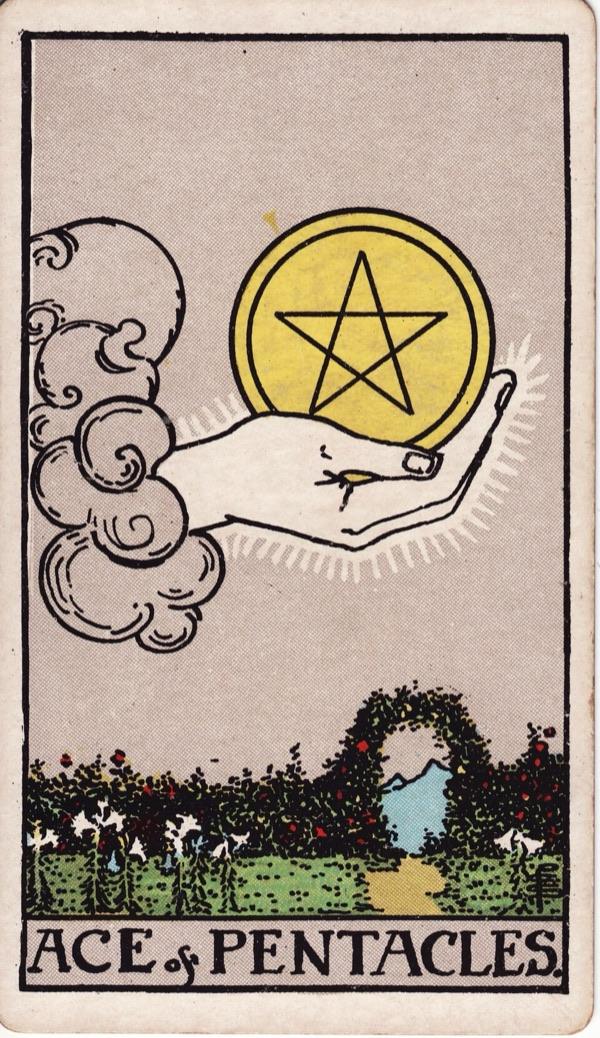
Ace of Pentacles
Upright
Perfect contentment, felicity, ecstasy; also speedy intelligence; gold.
Reversed
The evil side of wealth, bad intelligence; also great riches. In any case it shews prosperity, comfortable material conditions, but whether these are of advantage to the possessor will depend on whether the card is reversed or not. Such are the intimations of the Lesser Arcana in respect of divinatory art, the veridic nature of which seems to depend on an alternative that it may be serviceable to express briefly. The records of the art are ex hypothesi the records of findings in the past based upon experience; as such, they are a guide to memory, and those who can master the elements may—still ex hypothesi—give interpretations on their basis. It is an official and automatic working. On the other hand, those who have gifts of intuition, of second sight, of clairvoyance—call it as we choose and may—will supplement the experience of the past by the findings of their own faculty, and will speak of that which they have seen in the pretexts of the oracles. It remains to give, also briefly, the divinatory significance allocated by the same art to the Trumps Major.
A. E. Waite, The Pictorial Key to the Tarot (1911), Part III §2The picture
A hand—issuing, as usual, from a cloud—holds up a pentacle.
Older readings
The most favourable of all cards. Reversed: A share in the finding of treasure.
A. E. Waite, The Pictorial Key to the Tarot (1911), Part III §4. Waite collected these and says they often disagree with the main meanings.Waite wrote in 1911 and some of his meanings show it. Tarot is a tradition of reflection, not a prediction, and no card decides anything for you.